

Written by the Carpet Flooring Supplies team
Practical buying guidance based on current manufacturer specifications and our experience supplying carpet underlay nationwide.
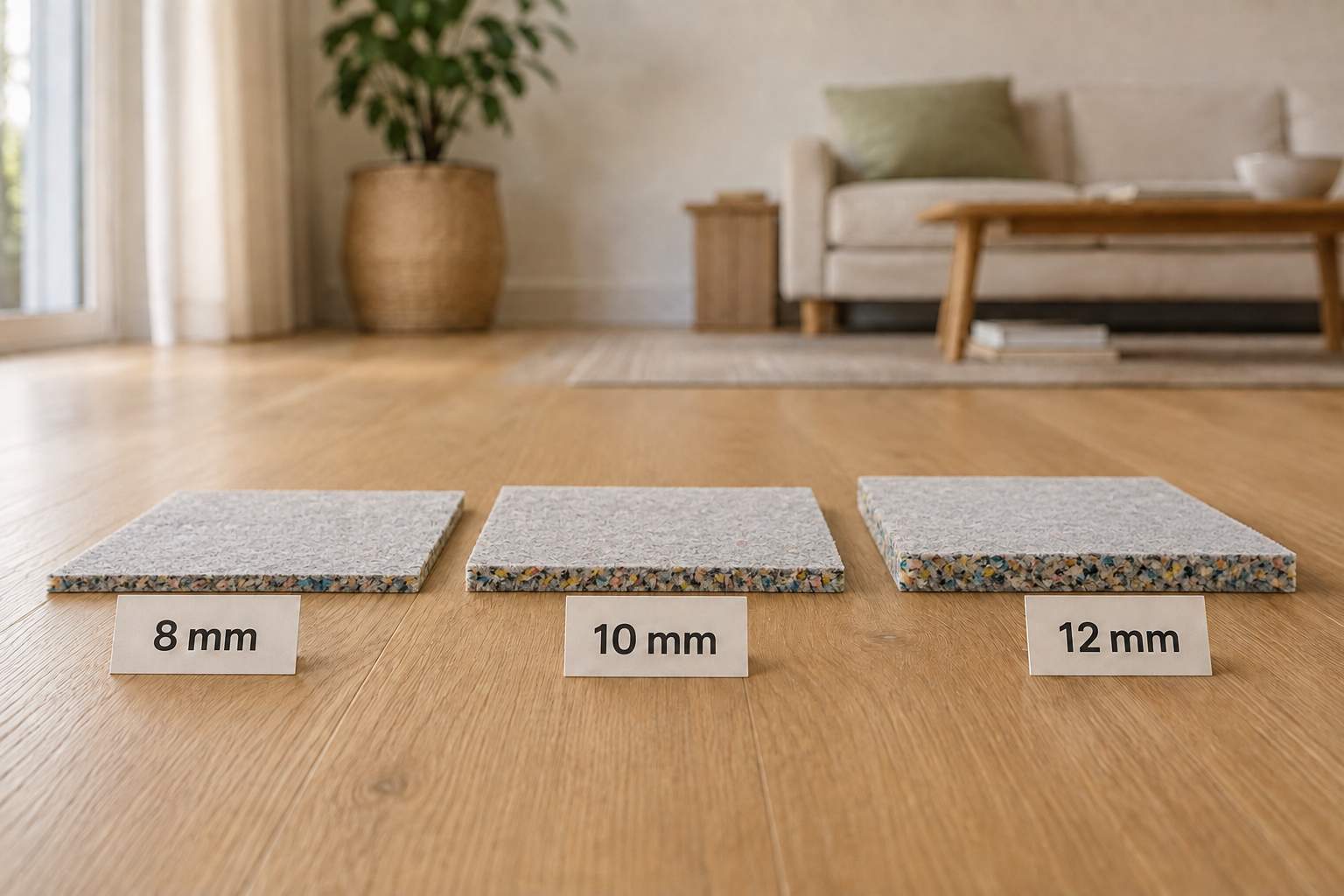
For most ordinary living rooms and bedrooms, a good-quality 10mm underlay is the sensible middle ground. It gives noticeable cushioning without being excessively thick. An 11mm or 12mm product can feel more luxurious, while an 8mm product may be the better choice for stairs, heavy traffic, door clearance or a specialist installation.
That is the short answer. The useful answer is that thickness is only one part of the specification.
A dense 8mm rubber underlay may keep its shape under heavy use better than a soft 12mm foam product. A 6mm specialist underlay may be preferable for use with underfloor heating because it lets heat pass through more readily. When comparing products, look at the material, density, intended use, tog rating and sound-reduction figure alongside the thickness.
Quick comparison
| Thickness | Usually best for | Main advantage | What to check |
|---|---|---|---|
| 8mm | Stairs, hallways, firmer support and some commercial-style uses | Lower profile and often a firmer feel | Density, durability rating and intended use |
| 10mm | Living rooms, bedrooms and general whole-home use | Good balance of comfort, warmth and price | Tog rating, sound rating and room suitability |
| 11–12mm | Bedrooms and lounges where softness is the priority | Deeper, more cushioned feel | Door clearance, furniture indentation and suitability for stairs or UFH |
These are practical starting points, not rigid rules. The product specification should always take priority over thickness alone.
Is thicker carpet underlay better?
Not always. Greater thickness can provide more cushioning and thermal resistance, but it does not automatically mean greater durability.
Underlay supports the carpet as people walk across it. In a busy hallway or on a staircase, the material must recover after repeated compression. If it is too soft for the application, it can allow excess movement beneath the carpet. That can affect how the floor feels and may contribute to premature wear.
The right question is therefore not simply, “How thick is it?” Ask:
- Is it recommended for the room?
- Is it rated for the expected level of use?
- Does it have the right thermal resistance for the heating system?
- Will it fit beneath doors and at flooring transitions?
- Is it compatible with the carpet and fitting method?
When should you choose 8mm underlay?
An 8mm underlay can be an excellent choice where you want a firmer, lower-profile floor or strong resistance to repeated traffic. Thickness does not tell you the material, so two 8mm products may perform very differently.
Dense crumb-rubber products are often chosen for demanding areas. Interfloor's Tredaire Treadmore, for example, is 7.95mm thick and is specifically recommended by its manufacturer for stairs, landings, heavy furniture and high foot traffic. Its high density gives it a different character from a lightweight foam of similar thickness.
An 8mm option may make sense for:
- stairs and landings;
- hallways and other busy routes through the home;
- rooms with heavy furniture;
- areas where door clearance is tight;
- people who prefer a firmer floor underfoot.
If you are buying for a staircase, start with our guide to the best underlay for stairs and hallways or browse underlay for stairs.
When should you choose 10mm underlay?
For many homes, 10mm is the easiest all-round thickness to recommend. It can add comfortable cushioning without creating the very deep feel of a thicker luxury product.
A typical 10mm PU foam underlay may suit:
- living rooms;
- bedrooms;
- dining rooms;
- general domestic use;
- a home where one underlay is being used across several ordinary rooms.
Specifications still matter. Tredaire Super 10, for example, is a 10mm PU product with a stated 38dB sound-insulation figure, 2.4 tog rating and 15.07m² roll area. Together, those figures tell you far more about the product than the 10mm thickness alone: it is designed to balance comfort, thermal insulation and impact-sound reduction for general carpet installations.
Explore our full range of carpet underlay and use the filters to compare thickness, material, tog and sound rating.
When should you choose 11mm or 12mm underlay?
Thicker underlay is most appealing where underfoot comfort and heat retention are the priorities. It can work particularly well in bedrooms and lounges, where the floor is less exposed to concentrated traffic than a staircase or entrance hall.
For a real-world reference, Cloud 9 Cumulus is 11mm thick and is classed by Ball & Young for prestigious luxury use. Its published figures include 3.1 tog and 43dB sound insulation. That makes it a deliberately warm, cushioned product rather than an underlay for every possible application.
Before choosing an 11mm or 12mm underlay, check:
- whether doors will still open freely;
- the height difference at adjoining floors;
- whether the carpet manufacturer places a limit on underlay thickness;
- whether the product is recommended for the room;
- whether you have underfloor heating.
High-tog luxury underlay is usually the wrong choice for a heated floor because it resists the passage of heat. Read our guide to the best underlay for underfloor heating before ordering.
Thickness, density and material: what is the difference?
Thickness is the physical depth of the underlay. It influences the floor height and can contribute to cushioning.
Density describes how much material is packed into a given volume. A denser product will normally feel firmer and can be valuable in areas exposed to heavy or concentrated use. Compare density only where manufacturers supply it on a like-for-like basis.
Material affects the way the underlay responds. PU foam is light, easy to handle and available in many comfort grades. Sponge rubber has a springy, consistent structure. Crumb rubber is generally dense and firm. Each category contains products designed for different jobs, so material is not a quality grade by itself.
Our PU foam vs rubber underlay guide explains these differences in more detail.
What about underfloor heating?
Choose by tog rating and system compatibility, not by a preferred thickness. Underfloor-heating manufacturers set limits for the total thermal resistance above the heating system. That total can include the carpet, underlay and any overlay.
Published limits vary by system. Nu-Heat says the carpet and underlay should not exceed 2.5 tog for its guidance, and preferably be below 1.5 tog with a heat pump. Warmup's electric-carpet guidance states an overall limit of 1.5 tog unless otherwise specified. Always use the limit supplied for your own installation.
Specialist products can be thinner and much lower in tog. Duralay Heatflow Carpet is 6.1mm thick with a published 0.75 tog rating, for example. Its specification is designed to let warmth pass through; choosing a standard 10mm or 12mm thermal underlay instead could obstruct heat transfer.
Our practical recommendation
Choose the room first, then the specification:
- For most living rooms and bedrooms: begin with a quality 9mm or 10mm domestic underlay.
- For a softer bedroom or lounge: consider an 11mm or 12mm luxury product after checking clearance and suitability.
- For stairs, landings or heavy traffic: prioritise density, recovery and the manufacturer's use rating; a dense 8mm product may be the better option.
- For underfloor heating: use a specialist low-tog underlay approved for the system, regardless of whether it is thinner than you first expected.
The best underlay is the one that supports the carpet and suits the room. Thickness should help you narrow the choice, not make the entire decision.
Frequently asked questions
Is 8mm underlay thick enough?
Yes. A well-specified 8mm underlay can be suitable for domestic use and may be preferable in busy areas or where a lower floor height is needed. Check the material, density and recommended-use rating rather than rejecting it on thickness alone.
Is 12mm underlay too thick?
Not for every room, but it can be unsuitable where doors have little clearance, the carpet requires firmer support or an underfloor-heating system needs low thermal resistance. Check both the carpet and underlay specifications.
What thickness underlay is best for a bedroom?
Domestic underlays from 8mm to 12mm are commonly used in bedrooms. Choose 11mm or 12mm if a softer, warmer feel matters most, subject to door clearance and product compatibility.
What thickness underlay is best for stairs?
There is no single correct thickness. A dense, resilient product recommended for stairs is more important than maximum depth. Some purpose-suited crumb-rubber underlays are around 8mm thick.
Can I use 10mm underlay with underfloor heating?
Only if the underlay and heating-system manufacturers approve it and the total tog remains within the system's limit. Many standard 10mm underlays have too high a tog rating for some underfloor-heating systems; a specialist low-tog product is usually more suitable.